Overview of the Pandemic
Cities are distinct because cities are economic centers, they have many restaurants, tourist spots, community parks, large office or commercial buildings, and most of all- a large number of people. With the COVID-19 pandemic, the areas with the most significant change in their day-to-day functions are the urban cities. Streets that once used to be crowded during business hours, streets that were once public hot-spots during weekends, and streets that were full of food-trucks with children playing around those stands waiting excitedly for their food are all, but the same. The pandemic has led to a global lockdown, resulting in empty streets, mass unemployment, and economic downfall.
The Coronavirus pandemic has created challenges for everyone, most of all the residents of urban cities. The public transportation in major cities is limited, if not terminated altogether, airports have been shut, offices have been closed; the world has literally come to a standstill. With everyone being affected in some way, the definition of what used to be normal is now merely a distant dream. Something as simple as going on a small walk, or going out to meet friends, is now considered risky. Some of the most important challenges urban communities are facing are unemployment, economic downfall, everything around being shut, and streets being deserted. Even in the major cities like New York, medical centers are running out of essential medical supplies, ventilators, and even protective equipment used by doctors and nurses.

The normal we all used to know and live, a few weeks ago, is probably never going to happen again. There would a new normal, with new changes, new norms, new attitude, and new measures – a change that the global population would learn to grow and live with. With the help of effective measures and the use of modern technology, the challenges could me mitigated and would help the global population in transitioning to a new normal. Some of these changes and how technology might help bring the changes are discussed below.
Major Changes
Social media and video conferencing platforms
Humans are social animals. After food, water, and shelter – our social networks are a necessity to us, no matter big or small. One of the major and the most significant changes that has come with the current pandemic is the disruption of social life of people. Hanging out with friends, eating out with family, attending concerts, having a graduation ceremony – these were all considered the normal ways to interact with people. The pandemic has brought such a polar change that even hand-shaking – a centuries old gesture, now comes with an element of major risk. All the ‘Stay-at-home’ orders and mandatory ‘Social-distancing’ are essential to flatten the curve now, but it comes with a cost. Studies have shown that social isolation can have psychological effects on people.
A 2015 meta-analysis of the Scientific literature by Julianne Holt-Lunstad, a research psychologist at Brigham Young University, and colleagues determined that chronic social isolation increases the risk of mortality by 29%. [1]
Not only this, businesses have been affected due to the pandemic. Offices have been shut, schools have closed, all the events around the world have been cancelled. In a way, everything – EVERYTHING has been disrupted in one way or other.
Interestingly, this is the first pandemic in the history, where people have access to the internet. This makes these gloomy, isolated days a little hopeful.

- Offices have transitioned to the Work from Home culture, with the use of technological tools like Zoom, Microsoft Team, and Skype. From an intern to the CEO of the company, they have all switched to attending online meetings.
- Schools and universities have also adapted to online teaching methods so that students’ learning is not affected. Thanks to Zoom again!
- The graduation ceremony is a milestone in a student’s life. In my case, my family was supposed to fly to the US all the way from India to celebrate this milestone with me. Now that it is no longer possible, the only option I have is to make whatever I can to celebrate my college degree with the help of these tools.
- In countries like India, the lockdown is so strict that people cannot get out of their houses even for a walk. Families have started gathering over video calls to celebrate festivals that were once celebrated together. Some people join over video calls to play games, just as a time-pass during these difficult times.
All of this has been possible only due to the smart technologies that we have. Social media and video conferencing platforms have brought us all together, even when physically apart. I believe that the use of these tools in only going to increase as we get used to the new normal.
E-healthcare
With the exponentially rising number of COVID-19 cases and the lack of medical supplies and medical personnel, going to the doctor has become hard. And testing for possible COVID-19 cases has become harder and harder – be it the lack of testing kits or the lack of hospital beds. Even testing for coronavirus with a testing kit comes with a dire risk as the virus is highly contagious and there is no vaccine or possible cure, not yet at least.
To combat this problem, a smart technological solution is the concept of e-Healthcare. Researchers have come up with online tools that use AI prediction algorithms to determine whether a person should get tested for the COVID-19 virus. The online tool consists of a series of health-related questions which would ascertain if the person is showing any symptoms for the virus. This lowers the risk of contamination.
Once we successfully flatten the curve, and cities start opening, when the economy takes a start again – it would be different. A new normal! Even then, social distancing measures would still be in effect. Taking a flight, going to a stadium, gathering in large crowds would never be the same. Especially then, these e-Healthcare measures would turn out to be immensely helpful. Monitoring travelers by setting up e-Healthcare booths at the airport would be essential, using this tool at a stadium to prevent further possible outbreak of the virus, and using this tool at other public places with mass gathering would be helpful and would become a new normal.
Once we have made sure that these tools are helpful, they can be further used to monitor other diseases, give patients the option to get cheap or free diagnosis, and save the extra effort that was once required in dealing with health issues and hospitals.
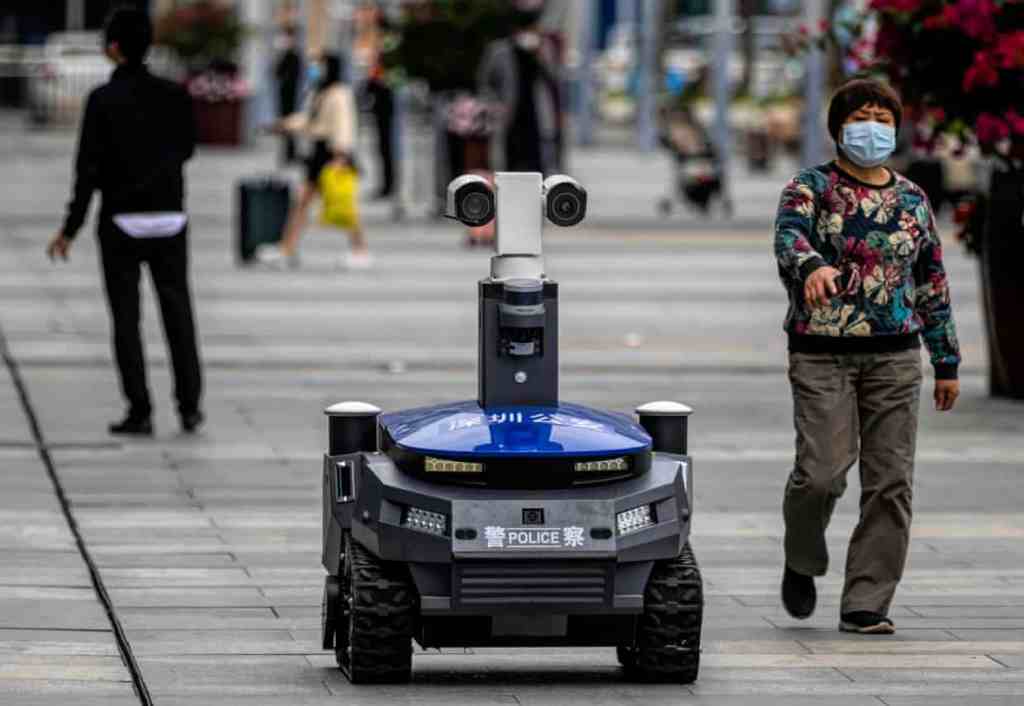
For example, in South Korea the government is using these tools to monitor people in public places to identify people who might show the symptoms of the virus. The use of this tool in South Korea, although controversial in the aspect of breaching privacy, has been successful. South Korea was one of the most hit countries with COVID-19 cases. But the effective use of social distancing and the use of technology to monitor people on the streets helped South Korea in flattening the curve.
Another example would be of the usage of automated rovers in China, where the rovers would go around on the streets, monitoring people for any possible symptoms, and reminding them to use face-masks when out in public. I believe that merging healthcare and technology together in this way would be common in the future, as it serves as a great example and has been proven effective.
Online tool to monitor government spending
Another problem that became apparent during this pandemic was the lack of medical supplies and other resources. We all learned how even a developed nation like the United States was barely prepared to deal with a pandemic of this scale. The lack of resources, medical supplies, essential medical tools, and the political restlessness all exacerbated the current situation. In other countries like India, for example, the topic of healthcare was hardly discussed amongst people. All people cared about was food, clothing, roof, and internet. But with the pandemic resulting in extreme outcome, healthcare is now a widely discussed topic. It is important for all people, especially those living in densely populated urban centers to know that they have access to good healthcare, particularly when it comes to something as severe as the coronavirus.
To have a better healthcare, it is important to re-structure the current healthcare system in several major countries. To do this, it requires for a better spending and an increased budget in the healthcare industry. I personally believe that people are oblivious to the day-to-day functioning of the government. Sure, people do know of what is being discussed and they all have opinions about the same, but no one really knows about the functioning of the industries and how the government is subjugating to it.
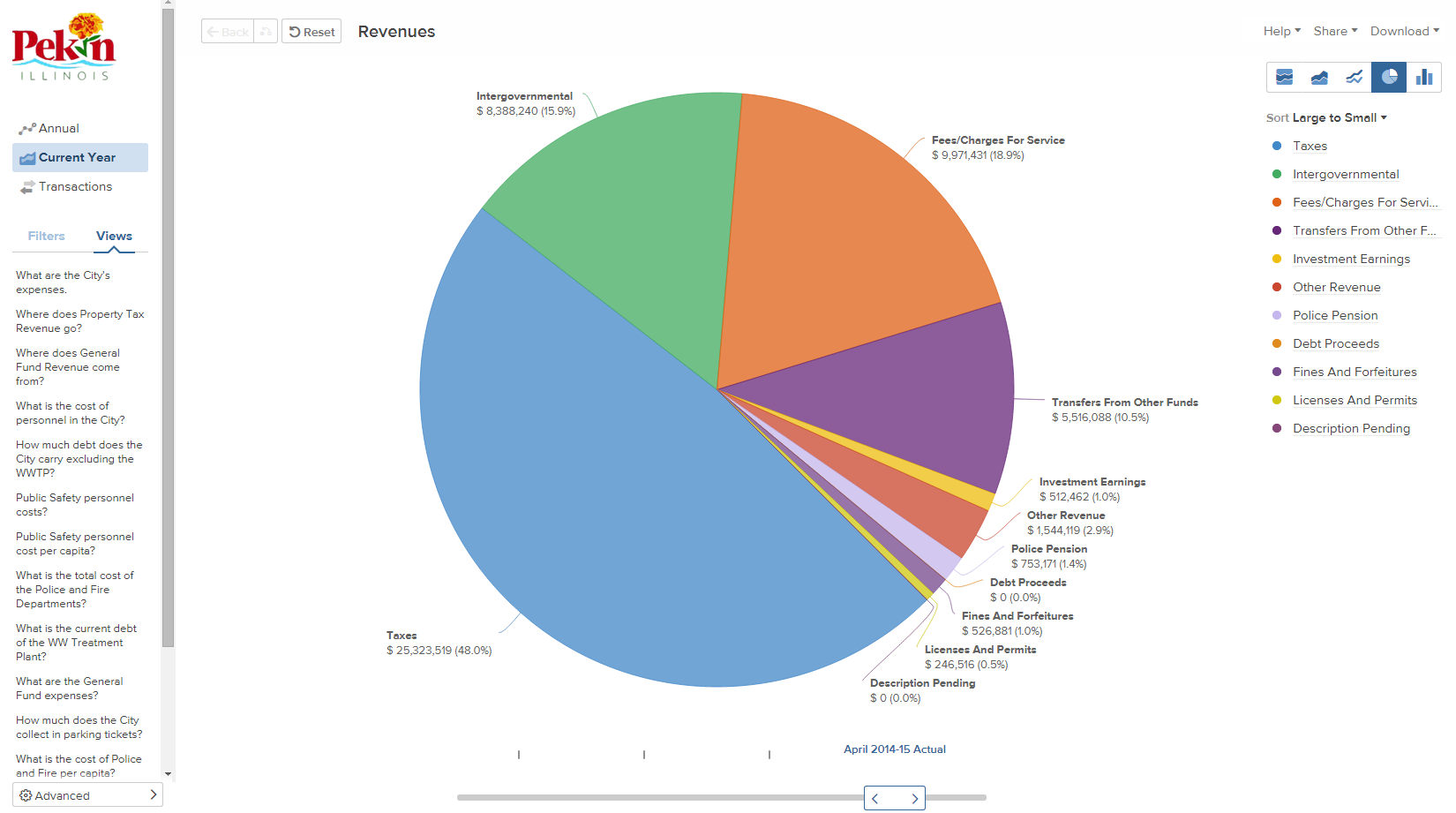
As a solution, I believe that there should be an online tool that would categorize how much the government is spending, in what industries, and by how much. With everyone having access to this tool, the relationship between people and their governments would become more transparent and would help people in realizing that healthcare is more important than weapons. I was surprised to learn how badly developed nations like United States and China were prepared to deal with a pandemic, and how they are better prepared to be in a war than deal with a pandemic. I believe that once all citizens of a nation have access to a tool like this where they can monitor government spending, and know where their taxes have been spent, they would realize that healthcare, food, housing, jobs, education, etc. are more important than weapons and missiles. Additionally, it would increase the engagement between the government and the people and would lead to transparency and accountability, and maybe a country would be better prepared the next time something of this scale occurs. (touch-wood)
References
MillerMar, G., CleryApr, D., HeidtApr, A., HeidtApr, A., Ortega, R. P., & HeidtApr, A. (2020, March 16). Social distancing prevents infections, but it can have unintended consequences. Retrieved from
https://www.sciencemag.org/news/2020/03/we-are-social-species-how-will-social-distancing-affect-us
 Smart Cities